Knowing how to sell coins properly can make a major difference in the value you receive. Whether you want to sell rare coins, inherited collections, or bullion pieces, understanding coin grading, appraisals, and reputable buyers helps you avoid costly mistakes and get fair market value.
That’s why this guide exists. At P&F Coins, we believe collectors and investors should feel informed, not pressured. This isn’t a sales pitch or a quick-cash tutorial. It’s a roadmap built from decades of market experience, one that helps you protect your collection’s value, avoid common pitfalls, and understand every step before you sell. By the end, you’ll know how to identify what you have, how grading affects price, where to sell safely, and how to recognize when an offer is truly fair.
Take a breath, grab a notepad, and let’s start with the basics because selling your coins shouldn’t feel uncertain. It should feel smart, transparent, and on your terms.
If you only remember one thing from this guide, let it be this:
Selling coins confidently comes down to five deliberate steps not guesses, not rushed offers.
Following these five steps ensures you stay in control from start to finish.
It turns what feels like a maze of options into a clear, repeatable process, one that helps you sell smarter, safer, and without second guessing the outcome.
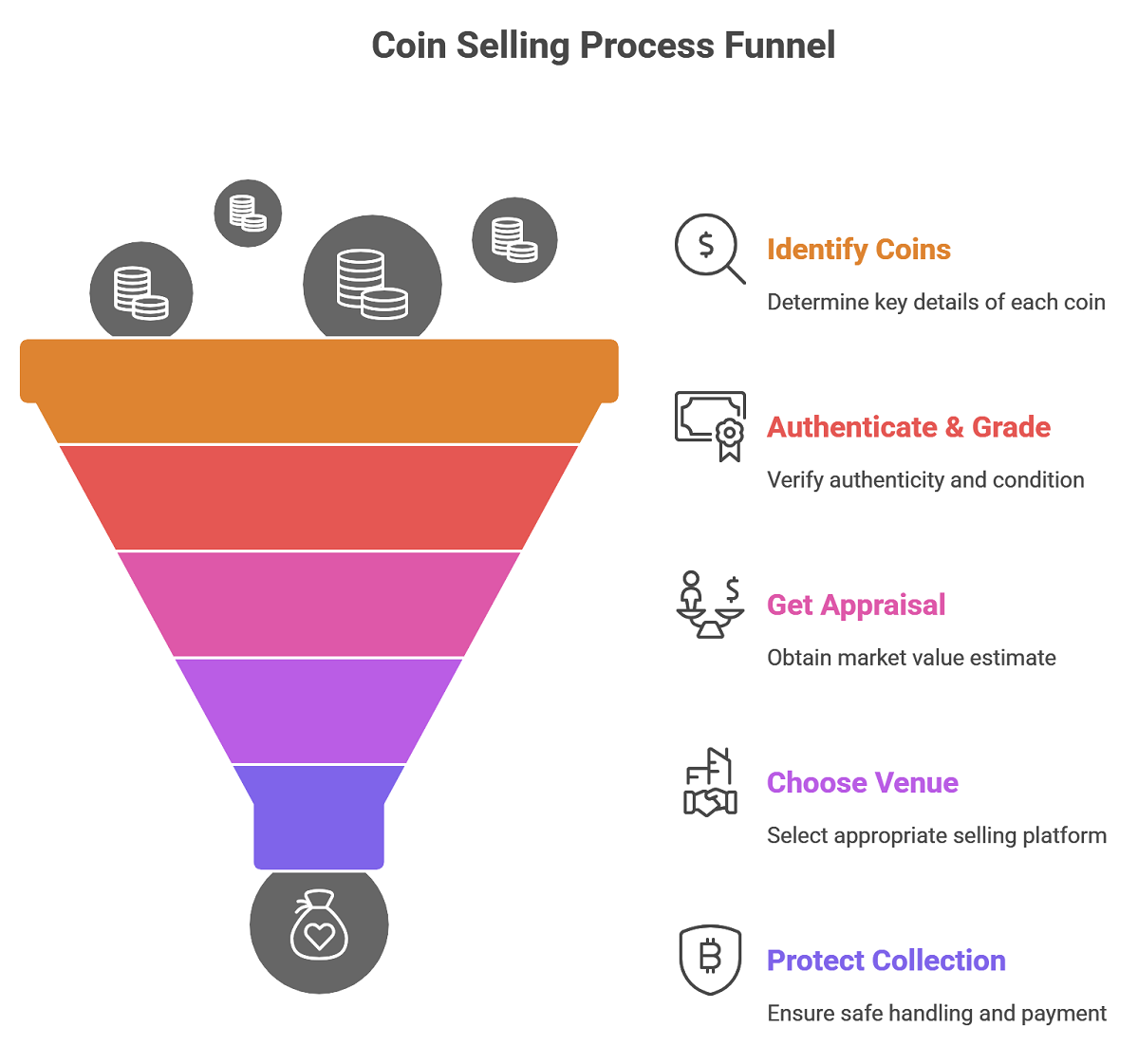
Before you can sell coins confidently, you need to know exactly what you own.
Most collections, even small ones, contain a mix of ordinary and exceptional pieces. The difference between a common coin worth a few dollars and a rare one worth hundreds (or thousands) often comes down to details so small they fit under a magnifying glass.
Lay your coins out on a clean, well-lit surface and take notes on:
Don’t worry about being perfect here. The goal is organization, not appraisal. Simply separating modern coins from older coins, circulated from uncirculated, will make later steps much easier.
Several factors combine to determine what a coin is worth:
At P & F Coins, we often remind sellers: a coin’s story matters almost as much as the coin itself. Even modest collections can hide treasures once they’re sorted and properly identified.
Once you’ve organized and documented what you have, it’s time to confirm authenticity and, if appropriate, submit your coins for professional grading.
That’s where real value clarity begins and it’s what we’ll cover next.
Grading can be one of the smartest moves you make before selling or an unnecessary expense if the coin doesn’t justify it. The key is knowing the difference.
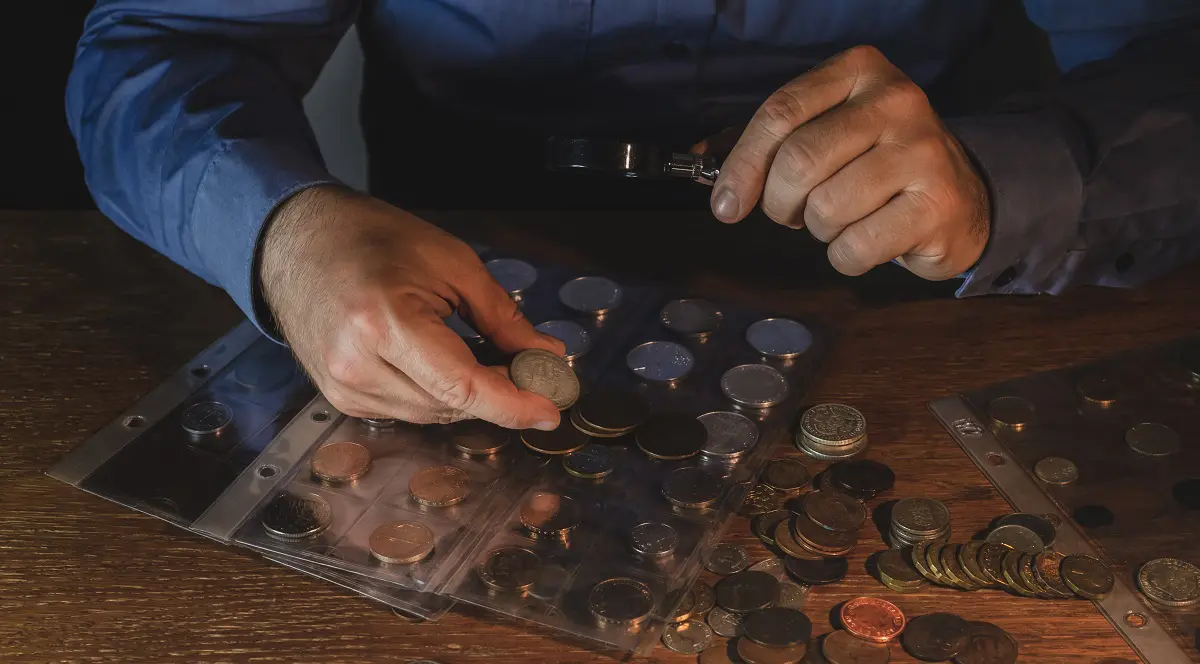
Grading is the process of evaluating a coin’s authenticity and condition, then sealing it in a protective holder (called a slab) with a standardized grade assigned by a recognized service like PCGS or NGC.
That little label carries a lot of weight. Buyers trust it because it removes uncertainty. A coin graded and certified by an established company usually sells faster, for a stronger price, and with less debate about value.
You’ll generally benefit from grading if:
Example: a raw coin estimated around $500 might rise to $1,200 once graded MS-65 by PCGS, a worthwhile investment.
Grading might not make sense if:
In these cases, a professional appraisal can confirm whether grading is justified saving you time and unnecessary cost.
If grading makes sense, here’s what typically happens:
At P & F Coins, we often advise clients to grade selectively. You don’t need to slab everything, only the pieces that will genuinely benefit from certification. The goal is always to enhance your collection’s credibility and selling power, not inflate costs.
Once your coins are organized and (if needed) graded, the next step is figuring out what they’re actually worth. This is where objectivity matters most. A coin’s value isn’t determined by what you hope it’s worth or what someone once paid for it; it’s set by the market, condition, and timing.
Online price charts and forums can be helpful, but they only tell part of the story. Many list idealized values, not what coins truly sell for in the current market.
A professional appraisal bridges that gap by combining:
An appraisal gives you a range not a single number because coins can sell slightly above or below average depending on the venue and buyer motivation.
Reputable appraisers, including P & F Coins, consider several benchmarks:
We use transparent reference tools like the PCGS Price Guide, NGC Price Index, and recent auction results to build realistic expectations. No mystery formulas, no hidden fees.
You can begin estimating value by recording:
| Coin | Grade | Metal Value | Comparable Sale | Realistic Range |
| 1881-S Morgan Silver Dollar | MS-64 (PCGS) | $20 | $185 – $210 | ~$200 |
| 1914-D Lincoln Cent | VF-20 (raw) | — | $180 – $220 | ~$200 |
This simple worksheet helps you see how grade, rarity, and demand work together. It also prepares you for more accurate offers once you consult a dealer.
We encourage clients to treat pricing as collaboration, not competition. We’ll walk you through the logic behind every estimate so you understand why a coin is valued a certain way. That transparency is what separates a smooth sale from a stressful one.
Even the best-valued coin can underperform if it’s sold in the wrong place.
Each selling route dealer, auction, or marketplace comes with its own mix of speed, exposure, risk, and payout. The secret is matching the venue to your goal.

Best for: Small collections, bullion coins, or anyone who prefers a quick, secure sale.
Selling directly to a dealer (like P & F Coins) offers immediate payment and minimal logistics. You walk in, review the appraisal, agree on a fair price, and complete the sale.
Pros: Fast, private, and safe.
Cons: Dealers purchase at wholesale levels so they can resell at retail meaning you may earn slightly less than at auction.
A reputable dealer will always explain how your offer was calculated. If someone refuses to discuss numbers, walk away.
Best for: Rare, high-grade, or historically significant coins.
Auctions attract specialized buyers and can drive prices upward if multiple bidders want the same piece.
Pros: Broad reach, transparent sale records, potential for premium pricing.
Cons: Seller’s fees (typically 10–20%), shipping costs, and longer wait times for payment.
Request an estimated hammer-price range and confirm all fees in writing before consigning.
Best for: Experienced sellers comfortable handling listings, shipping, and communication.
Platforms like eBay or dedicated coin forums let you set your own prices and interact directly with buyers.
Pros: Large audience and pricing freedom.
Cons: Risk of scams, chargebacks, and returns; shipping responsibility is entirely yours.
Safety checklist:
Best for: Collectors who want expert help marketing coins but don’t want to sell them outright.
With P & F Coins’ consignment model, we handle listing, promotion, and buyer screening while you retain ownership until the sale closes.
Pros: Professional handling and fair exposure.
Cons: Slightly longer turnaround and shared proceeds.
| Selling Method | Payout Potential | Speed of Sale | Risk Level | Best For |
| Dealer Sale | Moderate | Fast (same day) | Low | Quick, straightforward sales |
| Auction | High | Moderate – Slow | Low – Moderate | Rare or high-value coins |
| Online Marketplace | Variable | Fast – Moderate | High | Tech-savvy, hands-on sellers |
| Consignment | Moderate – High | Moderate | Low | Collectors seeking expert help |
Choosing the right selling path is about balance.
If you want speed, go local.
If you want visibility, go auction.
If you want control, go online.
And if you want partnership, P & F Coins can guide you through every option without pressure, just clarity.
The final step in selling coins confidently is protection for both you and your collection.
Even experienced collectors can lose value or face avoidable risks if they rush the logistics. These practical safeguards ensure that your coins, your money, and your peace of mind stay intact.
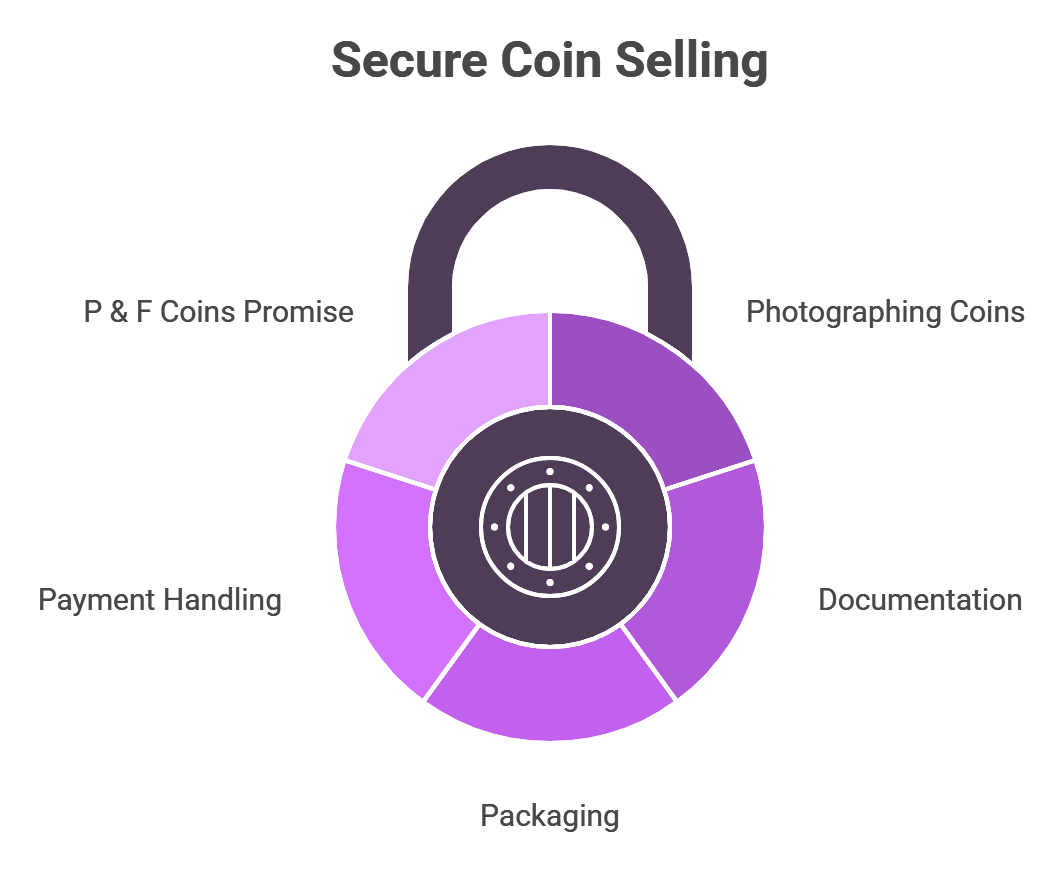
Before any transaction, take detailed, well-lit photos of:
Good photos serve two purposes: they market your coins professionally and protect you in the event of a dispute about condition or authenticity.
Use indirect natural light and a clean background to prevent glare and distortion.
Every coin you sell should have a paper trail. Collect and store:
Label everything with dates and values. If you’re ever asked to prove ownership or reconcile payments, clear documentation resolves issues instantly.
Coins are delicate and postal systems can be rough. To prevent loss or damage:
Photograph the packed box before shipping. If anything happens, you’ll have proof of condition.
For in-person sales, request certified checks or bank wires, never personal checks or digital apps.
For remote or online transactions, use escrow services or reputable payment processors that offer seller protection.
Be cautious of buyers pushing for non-traceable methods like crypto or cash via mail. Legitimate buyers understand the need for secure, auditable transactions.
When clients sell through P & F Coins, every transaction is documented, insured, and handled with the same level of protection we apply to our own inventory.
Our process includes detailed offer sheets, insured shipments, and transparent payment verification so you never have to wonder if you’re covered.
Protecting yourself isn’t about distrust, it’s about professionalism.
Whether you’re selling a single coin or a lifelong collection, treating every step with the same care you used to build your collection ensures a sale that’s safe, smooth, and satisfying.
Not every seller has the same priorities. Some care about legacy, others about liquidity.
Some chase the thrill of completing a set, while others simply want to simplify life.
How you approach selling depends as much on who you are as on what you own.
Let’s look at two of the most common paths and how each can sell confidently, on their own terms.
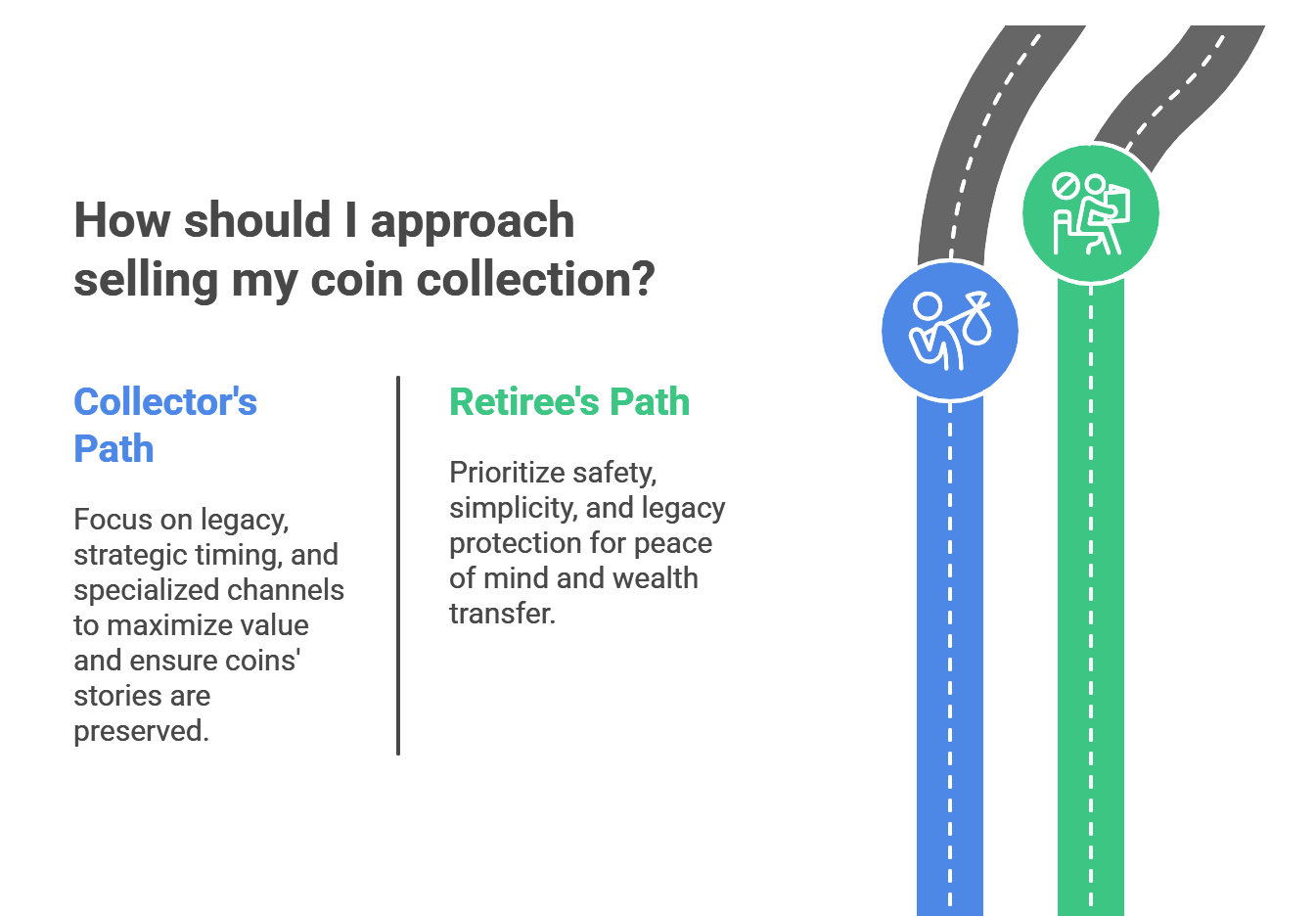
You’ve spent years curating your collection. Every coin has a story, a context, and maybe even a moment you remember finding it. Selling, for you, isn’t just about money it’s about stewardship.
Here’s what matters most:
At P & F Coins, we often serve as a bridge for passionate collectors ensuring that every coin transitions respectfully and that buyers understand its full significance. Your dedication deserves that level of care.
If your goal is clarity, liquidity, and peace of mind, your priorities differ and they should. You’re not just selling coins; you’re simplifying assets, reducing risk, and possibly preparing to pass wealth to family.
Here’s what matters most:
P & F Coins specializes in walking retirees through each step verifying values, explaining options, and handling the details with patience and respect. The goal is calm confidence, not chaos.
Whether you’re a lifelong collector or someone ready to simplify, the right sale isn’t just the one that makes the most money, it’s the one that honors your intent.
And that’s what P & F Coins believes in above all else: education first, pressure never.
The coin world is full of advice and not all of it is good.
Between online forums, social media “experts,” and old family legends, misinformation spreads fast. Some myths cost sellers hundreds of dollars; others simply waste time and cause stress.
Here are the most common red flags and half-truths to watch for and what’s actually true.
Age alone doesn’t equal worth.
A 19th-century coin minted in the millions might sell for a few dollars, while a 20th-century coin struck in tiny quantities could fetch thousands. Value comes from rarity, demand, and condition, not just the date on the coin.
It’s one of the most expensive mistakes new sellers make.
Cleaning removes patina, hairlines the surface, and instantly devalues the coin to serious collectors.
If a coin looks dull or dirty, resist the urge. Leave it as-is and let a professional evaluate it. A natural, original surface is always preferred.
A fair offer reflects market reality, not manipulation.
Reputable dealers factor in resale margins, authentication costs, and holding risk. If an offer feels low, ask to see recent comparable sales an honest professional will gladly explain. Transparency is a sign of credibility, not pressure.
Retail listings and price guides often show asking prices, not sale prices.
Actual value depends on demand and venue. Always check realized auction results or get a written appraisal to see where the market truly stands.
Never. Coins are compact, high-value, and occasionally targeted in transit.
Always use insured, trackable shipping with signature confirmation. The small insurance fee protects against loss that could cost far more.
Trust your instincts. The best professionals welcome your questions, show credentials, and let you take your time.
At P & F Coins, we’ve seen every version of these red flags and we’ve helped clients recover from them. That’s why our process is built around education first. When you know the truth, you’re unshakable.
At this point, you know how the selling process works and you probably see how many details there are to manage. That’s exactly where P & F Coin comes in. We don’t just buy coins; we guide collectors through every stage of the journey so each decision feels informed, fair, and stress-free.
We start with education, not persuasion. Whether you’re bringing in a single gold piece or an entire estate collection, our first step is helping you understand what you have. Every appraisal comes with a clear breakdown: grading, market range, and recent comparable sales. You’ll never be left guessing where the numbers came from.
Once you know your coins’ true value, we help you decide how to sell not if you should.
Choose the path that matches your priorities:
No pressure, no hidden agendas, just honest guidance based on what benefits you most.
Every coin entrusted to P & F Coin is fully insured and logged the moment it enters our possession. We photograph, document, and track each item so your collection is protected throughout the process.
Our facilities meet industry-standard security protocols because peace of mind should be part of the transaction.
We’re not just dealers; we’re collectors ourselves. We understand the emotion behind every piece and the pride behind every set. That’s why we treat every client with patience and respect, no matter the collection size.
You can ask us anything from grading advice to market timing and we’ll walk you through it without jargon or urgency.
When you’re ready to move forward, we’ll be right here ready to help you sell confidently, on your timeline, and in a way that honors both the value and the story of your collection.
Selling coins confidently starts with knowledge and the right tools make the process easier, safer, and more rewarding. Below you’ll find resources trusted by collectors, along with guidance to help you keep learning long after this guide ends.
If you’re ready to sell, don’t rush. Review your collection with what you’ve learned:
Every step helps you keep control of the process and every ounce of clarity saves you from costly mistakes.
Whether you’re organizing a lifelong collection or liquidating part of an estate, P & F Coins provides:
We exist to make selling coins a learning experience not a leap of faith.
If you’re thinking about selling your coins whether it’s a single piece, an inherited collection, or years of careful collecting start with a professional evaluation.
At P & F Coin, we:
There’s no obligation to sell, and you’ll leave knowing what your collection is truly worth with confidence, not pressure.
Visit us at 561 1st St N, Alabaster, Alabama Or schedule a consultation.
It deserves honesty, clarity, and care, the kind of experience where you don’t just sell your coins, you honor their story.
That’s what P & F Coin stands for: Real value. Real respect. Real people.