

You have a coin collection, and you’re thinking about selling it.
Maybe you inherited it. Maybe you’ve had it for years. Or maybe you just realized it could be worth something.
But here’s the real issue. You don’t know what you actually have. And you don’t know what a fair price looks like.
That’s where most people lose money. They go to a buyer, get an offer, and accept it because it sounds reasonable. Later, they find out they could have gotten more. Not because they were careless, but because they didn’t have enough clarity going in. Selling coins is not just about finding someone to buy them.
It’s about understanding:
For example, two collections can look almost identical at first glance. One might be worth only its metal value. The other could contain coins that collectors actively search for at much higher prices.
If you don’t know the difference, you’re negotiating from a weak position. This guide is designed to fix that.
You’ll learn:
The goal is simple. Give you enough clarity to make a confident decision, instead of a rushed one.
Before you think about selling, you need to understand how value actually works. Most people assume coins are worth whatever the metal is worth. That’s only part of the picture.
In reality, coins are valued in two completely different ways. And knowing the difference is what protects you from underpricing your collection.
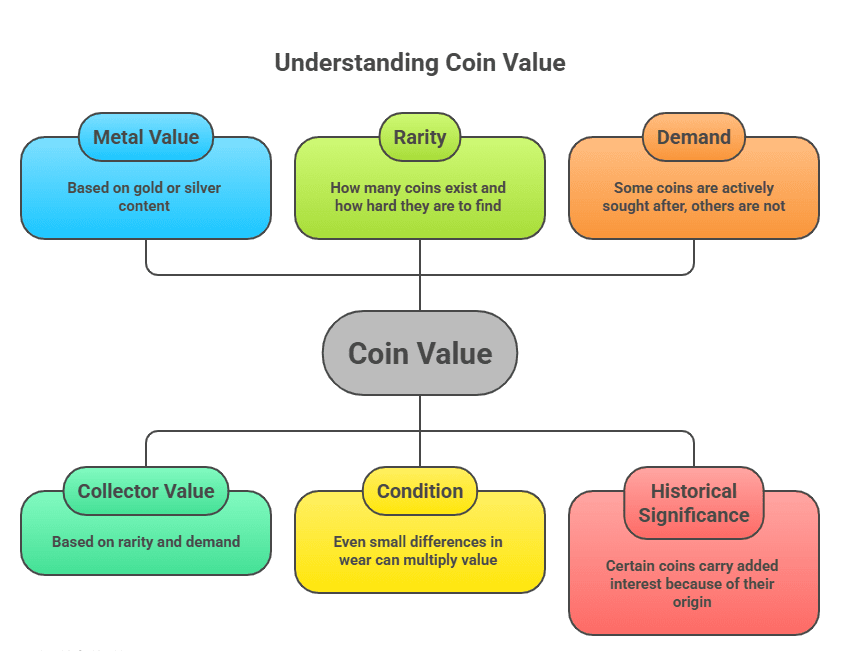
Every coin falls into one of these categories:
A single collection can contain both. And this is where mistakes happen.
You can have two coins that look almost identical.
The difference comes down to a few key factors.
Every coin is evaluated based on:
These factors work together, not separately.
This is the critical mistake:
Both lead to bad decisions.
Before you decide how to sell, you need clarity on what you actually have.
That distinction is what moves you from guessing to making informed decisions
And that’s exactly the position you want to be in before speaking to any buyer.
You don’t need to become a coin expert. But you do need enough clarity to avoid guessing.
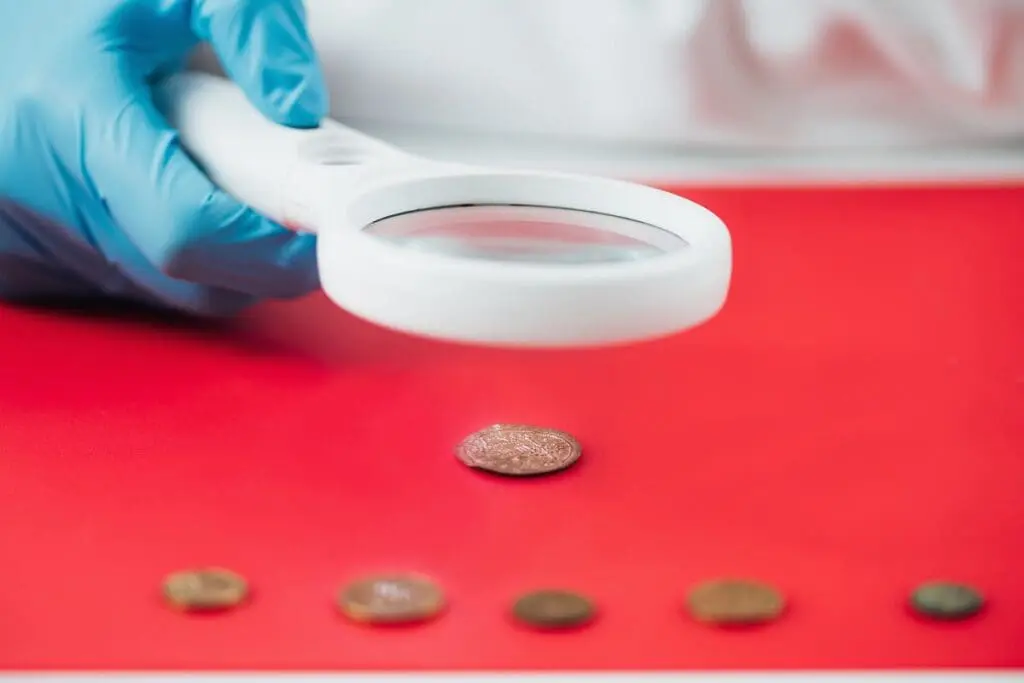
This step is where most people either:
The goal is simple: know what you’re holding before anyone else tells you what it’s worth.
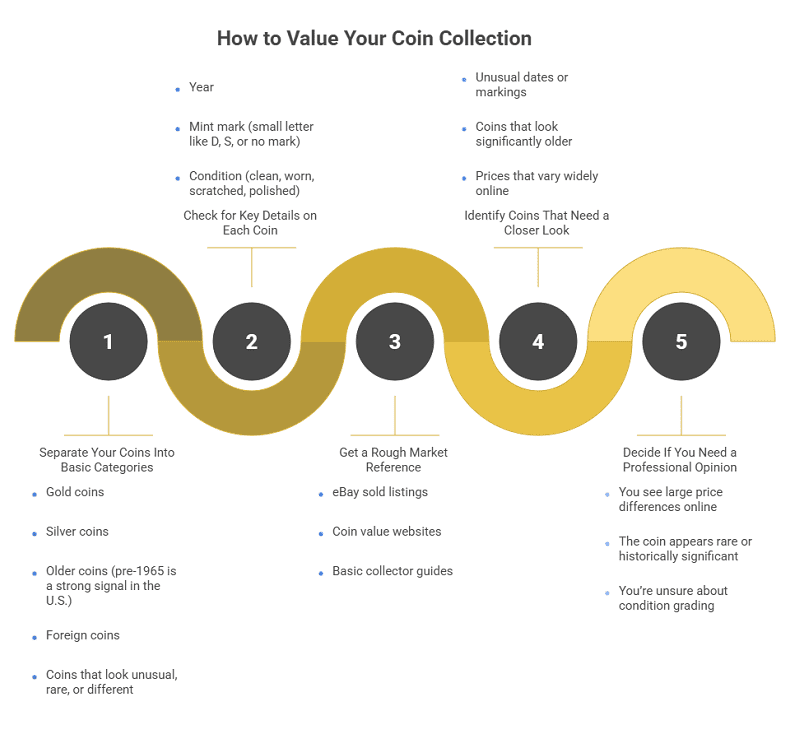
Start by organizing your collection. You’re not pricing yet. You’re just creating order.
Group your coins into:
This alone reduces confusion fast. Instead of one overwhelming pile, you now have structured groups you can evaluate.
Now you move from grouping to inspection.
Look at each coin and note:
These three details drive most of the value. A small difference in year or mint mark can completely change the price.
Example:
This is where attention pays off.
Now you need a reality check.
Use simple, accessible sources:
Focus on actual sold prices, not listings. Listings show what people hope to get. Sold data shows what people actually paid. This one distinction protects you from inflated expectations.
At this point, most coins will fall into a clear range. But a few might stand out.
Watch for:
These are your “pause and verify” coins.
They might be:
Treat them differently.
You don’t need an expert for everything. But for certain coins, it’s the smart move.
Consider getting help if:
A quick evaluation can prevent a costly mistake.
This is where things go wrong fast.
That last one is critical. Cleaning a coin can reduce its value significantly. Collectors often prefer the original condition, even if it looks worn.
After this process, you don’t just “have coins.”
You have:
That changes how you approach selling. You’re no longer reacting to offers. You’re evaluating them.
There isn’t one “best” place to sell coins. There’s only the right place for your situation.
What you choose affects:
Most people lose money here because they pick based on convenience, not strategy.
This is the fastest and simplest route. You walk in with your coins. You walk out with an offer.
Best for:
What to expect:
Why lower? Because the dealer needs margin to resell.
Example:
That spread is the price of convenience.
When this makes sense:
You want speed. You don’t want to deal with listings, buyers, or shipping.
This gives you access to real buyers. Not dealers. Not middlemen.
Best for:
What to expect:
This is where your earlier research pays off. If you price correctly and present the coin well, you can match real market value.
Reality check:
Higher price comes with friction.
If you’re not willing to handle that, this option will frustrate you.
This is where rare or high-value coins perform best. Auctions create competition. Competition drives price.
Best for:
What to expect:
Example:
A coin valued at $500 might sell for:
That’s the trade-off. Uncertainty vs upside.
This is a more targeted environment.
You’re dealing directly with people who understand coins.
Best for:
What to expect:
This reduces the risk of accepting a weak first offer.
This is the most selective path. You sell directly to someone who wants that specific coin.
Best for:
What to expect:
This works best when you already understand your coin’s value well.
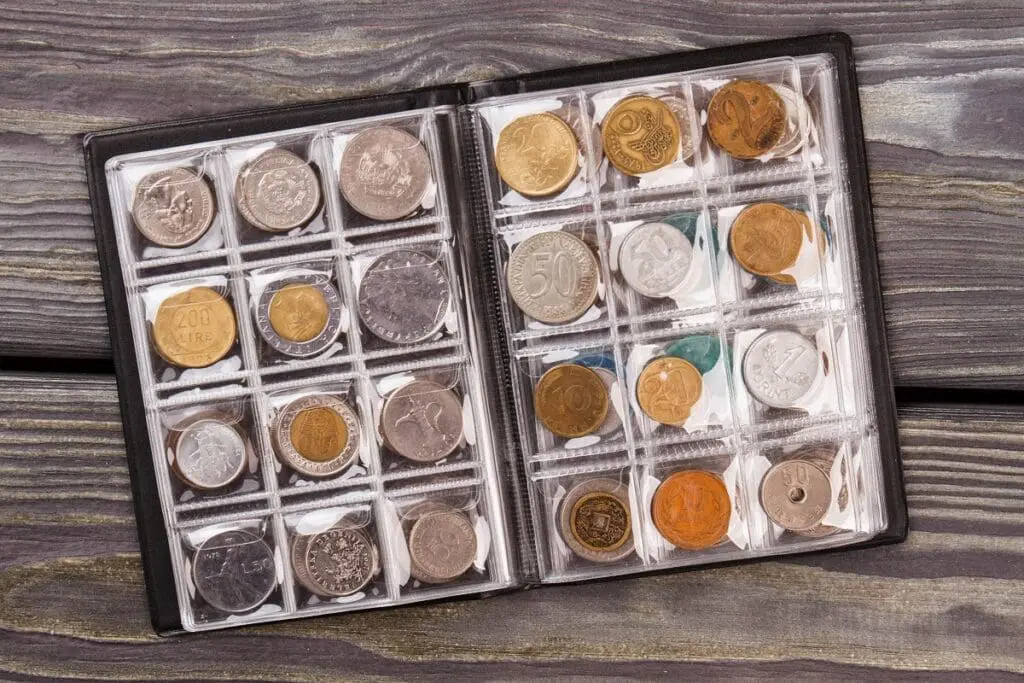
Don’t overcomplicate this.
Use a simple decision filter:
You’re not picking the “best” method. You’re picking the method that fits your priorities.
You don’t have to choose one path.
Smart sellers split their approach.
Example:
This approach maximizes both speed and value.
At this point, you’ve moved from uncertainty to strategy.
You now:
That’s what separates a rushed sale from a smart one.
You can do everything right and still lose money at this stage. Not because someone is trying to scam you. But because you don’t fully understand how pricing works.
Once you understand the logic behind an offer, everything changes. You stop reacting to numbers. You start evaluating them.
A dealer is not just looking at what your coins are worth today. They are thinking about what happens next.
Every offer is based on:
This is why two dealers can give different offers for the same collection. They are not using the same business model.
This is where expectations need to be realistic. If a coin sells online for $500, you will not be offered $500 by a dealer. Why?
Because the dealer needs to:
A typical range might look like:
That gap is not a loss. It’s how the market works.
A fair offer is not the highest number you’ve seen online.
A fair offer is:
You should be able to understand:
If the explanation is missing, the number doesn’t matter.
It’s normal to get different offers.
Here’s why:
Small differences are normal. Large differences with no explanation are not.
This is where you stay in control.
Use simple rules:
You don’t need to negotiate aggressively. You just need to understand what you’re being offered.
Pay attention to how the offer is presented.
Be cautious if you notice:
These are signs you don’t have enough clarity to make a decision.
At this stage, your goal is not to chase the highest number. Your goal is to recognize a fair, transparent offer.
When you understand:
You naturally avoid bad deals without needing to push or negotiate hard.
Most people don’t lose money because of bad luck.
They lose money because of small decisions that seem harmless at the time, but reduce the value of their collection without them noticing.
If you avoid these mistakes, you already put yourself ahead of most sellers.

This is the most common mistake. It feels logical. A cleaner coin should be worth more. In reality, the opposite is true.
Cleaning a coin can:
Collectors often prefer coins in original condition, even if they look worn.
Simple rule:
If you’re not a professional, don’t clean your coins.
Many sellers bundle their entire collection and accept one total price.
This creates a problem.
A better approach is simple:
This alone can make a noticeable difference in the final offer.
Some sellers rely on assumptions instead of verification.
Both assumptions can be wrong.
Without proper evaluation:
Clarity comes from structured evaluation, not guesswork.
There’s nothing wrong with selling quickly.
But speed usually comes with a cost.
The mistake is not choosing speed. The mistake is choosing it without knowing what you’re giving up.
Some sellers stay passive. They receive an offer and accept it without understanding it.
That’s where value gets lost.
You should always feel comfortable asking:
If you don’t ask, you don’t learn. And if you don’t learn, you can’t evaluate the offer.
Even honest buyers can see value differently.
If you only get one opinion:
Getting a second perspective gives you context, not confusion.
This shows up in two ways:
Both lead to poor outcomes. The goal is to separate emotion from value.
Most of these mistakes are easy to avoid once you’re aware of them. You don’t need advanced knowledge.
You just need:
That’s what protects your outcome.
At this point, you’ve done the work.
Now there’s one step that makes everything come together. Get a clear, professional evaluation before you sell.
That’s what turns uncertainty into confidence and helps you recognize a fair offer when you see one.
If you want a straightforward, no-pressure evaluation of your collection, you can request more information or schedule a consultation.
Make your decision based on clarity, not guesswork.