
If you’re new to precious metals, chances are you’ve already asked yourself this simple but surprisingly tricky question:
Should I buy silver bars or silver coins first?
It’s a fair starting point. For many first-time investors, silver is an appealing entry into the world of tangible assets. But the moment you start looking at options, the path splits coins or bars? And each comes with its own price points, advantages, and trade-offs.
At P&F Coin Company, we talk with new investors every day who are unsure where to begin. Some want to protect their family’s savings from inflation. Others are just curious about adding “something real” to their financial portfolio. But almost all of them share one thing in common:
They want honest guidance without pressure, jargon, or gimmicks.
This guide breaks it down with clarity. We’ll walk you through the key differences between silver coins and bars, from pricing and storage to liquidity and long-term strategy. Whether you’re ready to make your first purchase or still weighing your options, you’ll come away informed and empowered to take the next step when you’re ready.
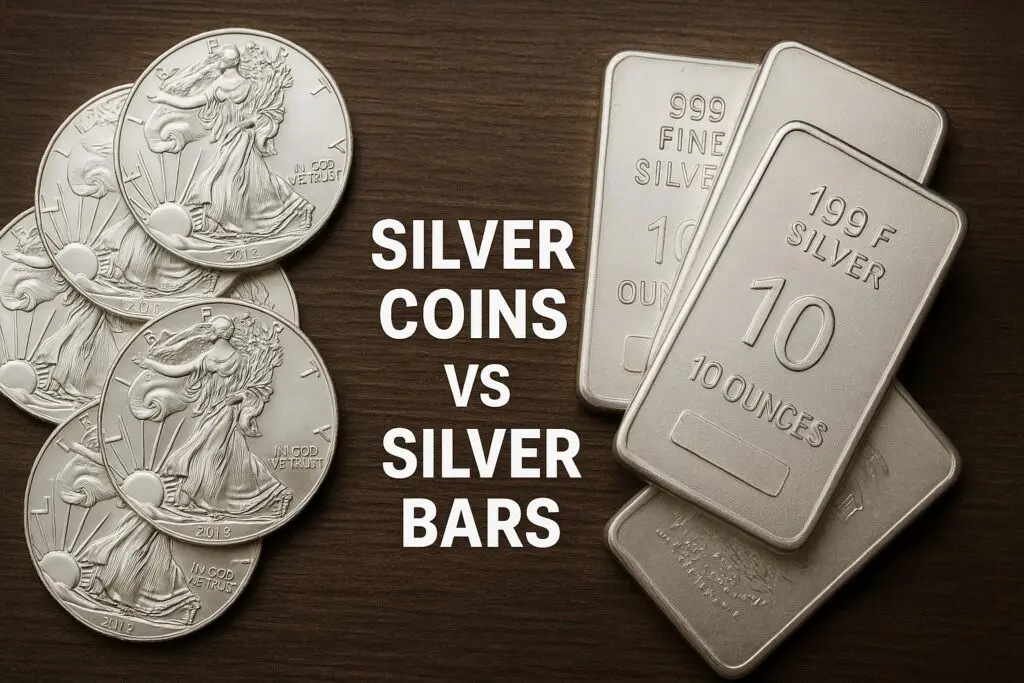
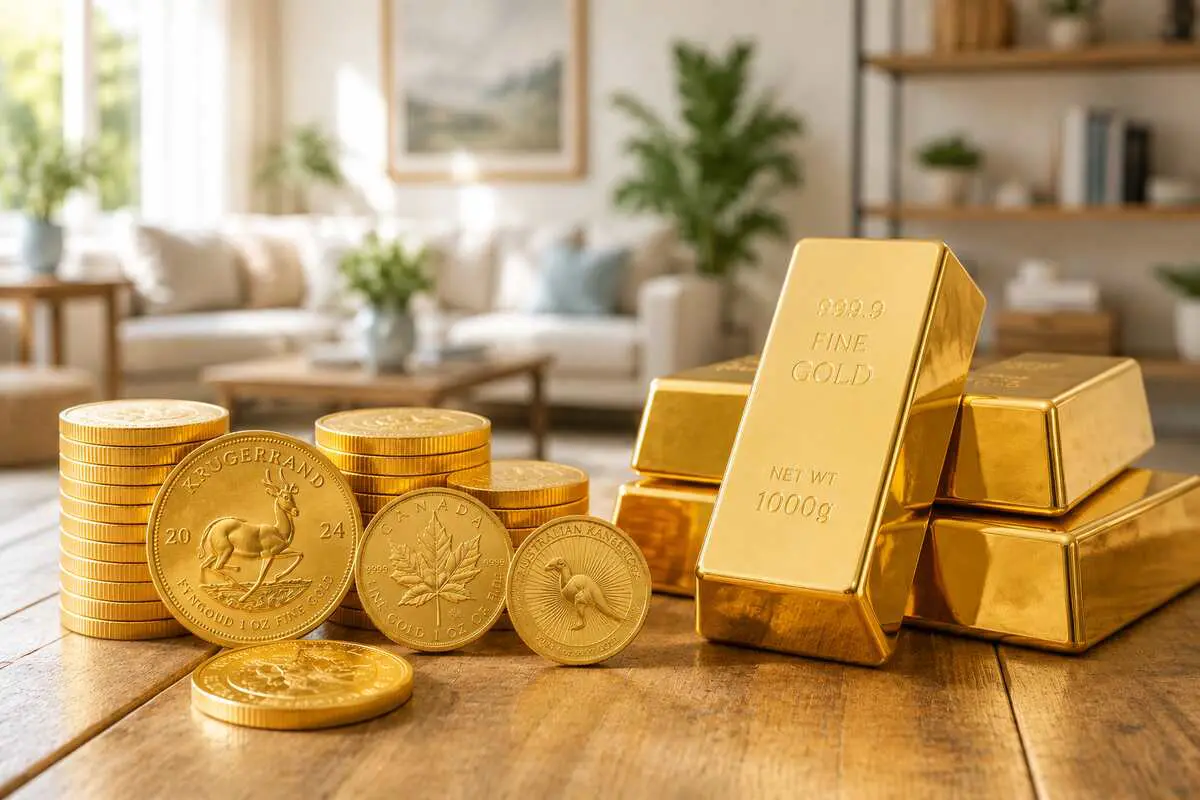
At a glance, both silver coins and silver bars serve the same core purpose: they’re physical forms of silver you can hold, store, and trade. But under the surface, there are key differences in design, recognition, and function that matter especially for first-time buyers.
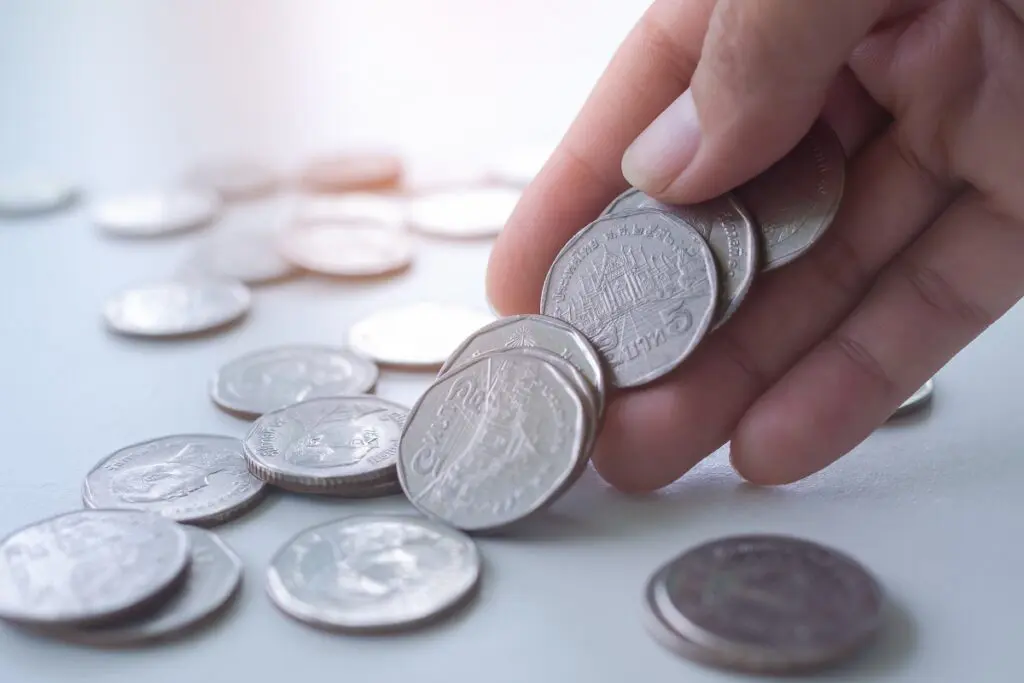
Silver coins are typically government-minted pieces made of investment-grade silver, such as:
These coins are:
Silver coins are not just bullion they often carry recognition value, which makes them easier to buy, sell, or trade quickly. They’re especially popular with new investors due to their smaller size (typically 1 oz), trusted sources, and ease of authentication.
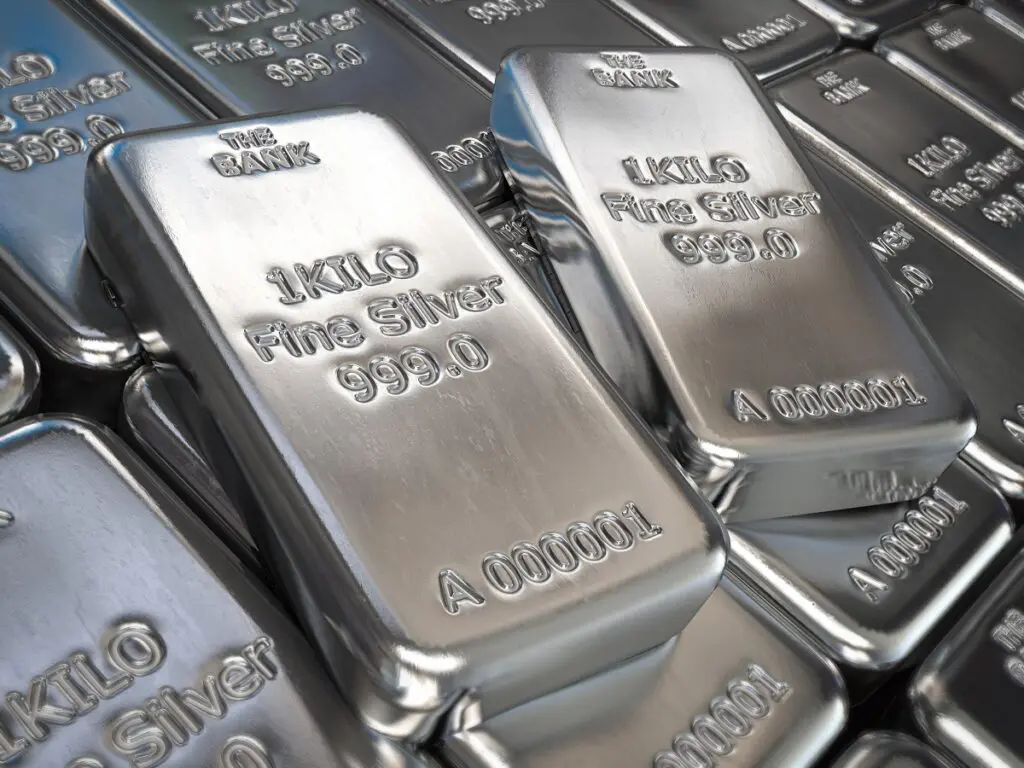
Silver bars are rectangular pieces of silver typically produced by private mints (like Scottsdale Mint, Valcambi, or Sunshine Minting), although some government mints also produce bars. Bars vary widely in size, including:
They are:
Bars aren’t legal tender and don’t carry collector or numismatic appeal but they excel in efficiency, especially if you’re buying larger quantities of silver.
Think of it this way:
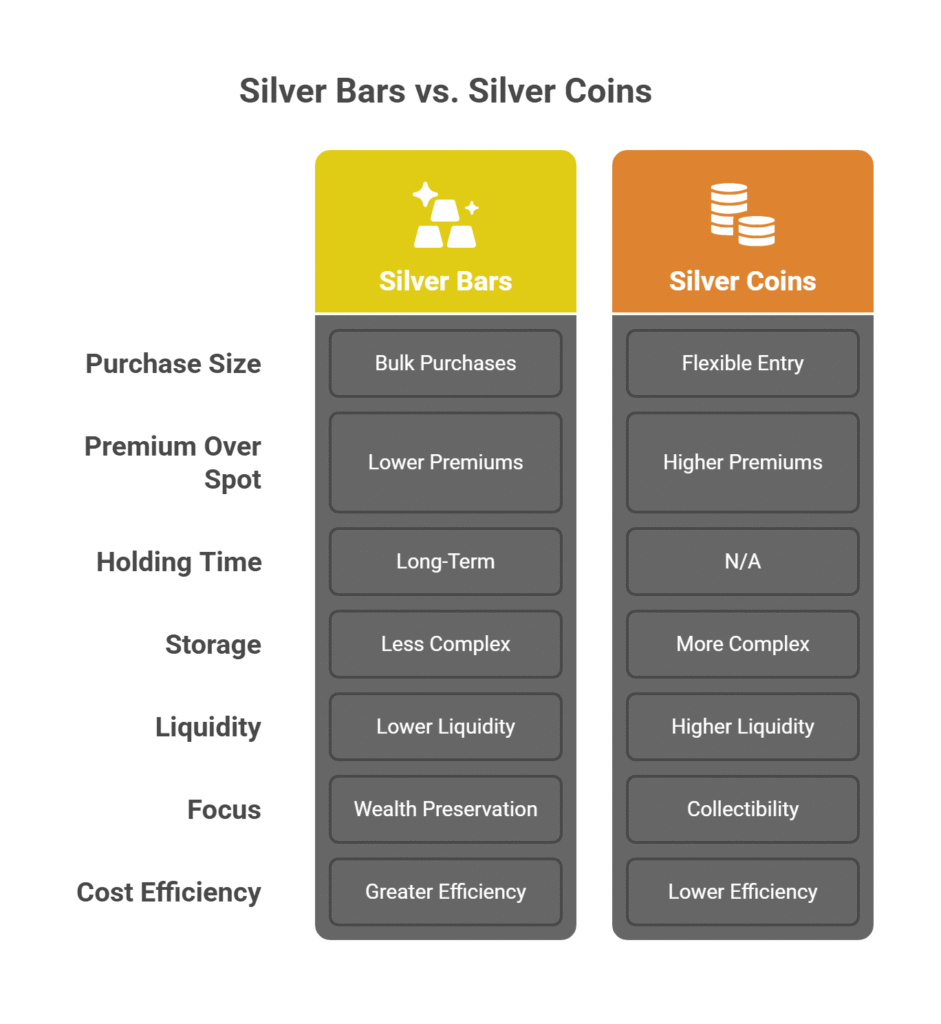
If you’re planning to slowly build your portfolio and might need to sell or trade in small increments, coins are likely a better fit. If your goal is to store a larger amount of silver securely for long-term wealth preservation, bars could be more cost-effective.
If you’ve been thinking about protecting your wealth in today’s uncertain economy, silver offers a practical starting point. It’s a tangible, time-tested asset that holds real value no screens, no passwords, no middlemen.
For first-time buyers, silver often feels more approachable than gold. It’s more affordable, easier to understand, and widely recognized around the world. Whether you’re diversifying your portfolio, starting a physical collection, or preparing for future instability, silver provides a way to own something real and that matters.
At P&F Coin, we believe in guiding you through each step with clarity and care no pressure, no gimmicks.
One of the first surprises for new silver buyers is realizing that you don’t pay just the “spot price” for silver. Whether you’re buying a bar or a coin, there’s a premium the amount you pay above the current market value of silver.
But that premium can vary a lot between coins and bars and understanding why can save you money from day one.
Silver coins especially government-issued ones tend to carry higher premiums for a few key reasons:
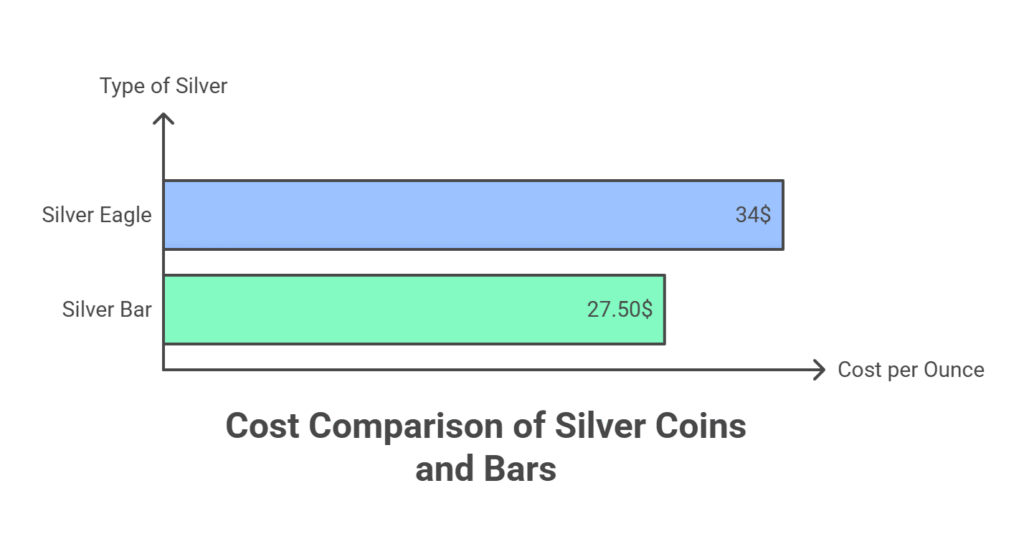
In practice, that might mean paying $7–$12 over spot per ounce for an American Silver Eagle, depending on the market and quantity purchased.
Silver bars typically carry lower premiums because:
A common 10 oz silver bar might carry a premium of just $2–$4 over spot per ounce, which becomes increasingly attractive if you’re buying larger amounts.
If you’re planning to buy just a few ounces of silver, the difference in premium may not feel dramatic. But if you’re building a serious silver position over time, those few dollars per ounce can add up quickly.
Example Comparison (as of recent averages):
Still unsure? At P&F Coin, we walk first-time buyers through both options so they understand exactly what they’re paying for, and why.
Liquidity is one of the most important but often overlooked factors when buying silver. In simple terms, liquidity refers to how quickly and easily you can resell your silver if you need cash or want to take advantage of market conditions.
Let’s look at how silver coins and silver bars compare when it’s time to sell.
Government-issued silver coins (like the American Silver Eagle or Canadian Maple Leaf) are among the most liquid forms of silver available. Here’s why:
Coins are ideal for:
Even during tight supply periods, popular silver coins tend to move faster because of the built-in demand and recognition.
Silver bars are generally less liquid than coins but that doesn’t mean they’re hard to sell. It just depends on how much silver you’re holding and who you’re selling to.
That said, bars can be extremely efficient when:
If you’re new to precious metals, having a mix of silver coins for flexibility and bars for savings can offer the best of both worlds.
At P&F Coin, we often help beginners build starter portfolios that combine small-denomination coins for liquidity and 10 oz bars for lower premiums all with clear explanations, no-pressure evaluations, and transparent pricing.
Once you’ve purchased your silver, the next question is: Where and how do you store it?
This is where silver coins and bars diverge in ways that affect everyday practicality, especially as your holdings grow.
When it comes to space efficiency, silver bars have a clear advantage.
But there’s a tradeoff: Larger bars are less flexible when it comes to selling small portions or transporting your silver discreetly.
Silver coins are:
However, if you’re building a larger silver position, coin storage can become:
Regardless of form, your silver should be:
Tip: P&F Coin offers guidance on how to store metals safely at home and what to consider if you’re storing silver as part of your long-term legacy planning.
In short:
Not all silver is bought purely for its metal content. For many investors especially those with an interest in history or legacy collectability adds another layer of value to the equation.
So, how do silver coins and silver bars compare in this regard?
Many silver coins, especially those issued by national mints, offer more than just silver content. They also carry:
Over time, certain coins even standard bullion coins like the American Silver Eagle can increase in value beyond their silver content, especially in specific years with lower mintages or high demand.
Note: This is not guaranteed, and coins should not be treated as speculative collectibles unless you’re truly interested in numismatics.
Silver bars, by contrast, are considered “pure bullion”. They carry no historical or collector value and are judged solely by:
While some bars come with attractive designs or tamper-evident packaging, they’re not collectible in the same way coins can be. Their resale value will closely track the spot price of silver, plus or minus a small premium depending on the brand.
If you’re:
At P&F Coin, we work with both investors and collectors. If you’re not sure whether collectibility matters for your goals, we’ll walk you through the pros and cons without trying to upsell you into something you don’t need.
Whether you’re buying coins or bars, one truth remains: not all silver is created equal. Ensuring the authenticity of your silver is crucial not just for peace of mind, but to protect your investment from counterfeits and overhyped claims.
Here’s how silver coins and bars compare when it comes to trust and verification.
Government-issued silver coins (like the U.S. Silver Eagle or Canadian Maple Leaf) are among the most trusted and secure silver products available.
Why?
That makes coins an ideal option for first-time buyers who want simplicity and confidence in what they’re purchasing.
Silver bars are typically produced by private mints, and their authenticity depends largely on:
While reputable bars are easy to verify, off-brand or generic bars may require additional steps like:
Dealers like P&F Coin use these tools daily to verify authenticity and protect buyers and sellers alike.
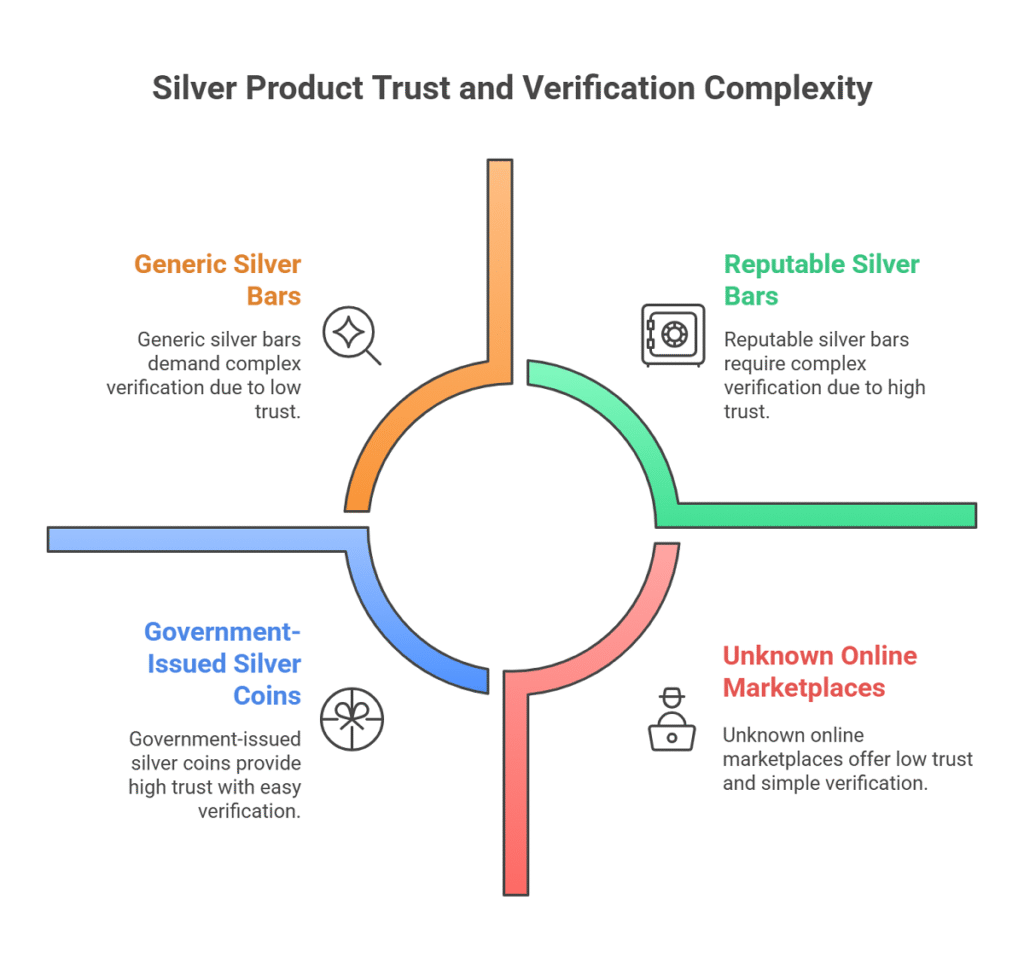
If you’re just getting started, stick to widely recognized coins or bars from top-tier mints. And always buy from dealers who explain their testing and appraisal process clearly.
At P&F Coin, we provide no-obligation authenticity checks for local sellers and help new buyers understand how to spot real value without needing to be an expert themselves.
If you’re new to precious metals, silver coins are often the smartest place to start. They’re flexible, easy to understand, and give you confidence with every ounce you purchase. But let’s break down exactly why they make sense for many first-time buyers.
Silver coins, especially 1 oz coins from well-known government mints, are designed with entry-level investors in mind.
Coins are especially useful if you:
Buying silver coins can also be a great way to learn about:
As you gain experience, you’ll have the knowledge and comfort to explore bars or even collectible coins on your own terms.
At P&F Coin, we often suggest that new buyers start with 3–5 ounces of recognizable silver coins. It offers a low-risk, high-confidence way to enter the market and you can always expand your strategy as you learn.
No pressure. Just clarity.
While silver coins are a flexible entry point, silver bars can offer serious benefits especially for those thinking long-term, buying in larger amounts, or focusing purely on metal value.
If you’re looking to build a larger silver position efficiently, this is where bars start to shine.
Silver bars typically have lower premiums over spot price, meaning you get more silver for your money.
The larger the bar, the greater your cost-efficiency especially when premiums are elevated during times of high demand.
Silver bars work well if you:
You’re not paying for design, collectability, or easy liquidity you’re paying for raw silver content.
Compared to managing hundreds of individual coins, a few large bars offer:
Just keep in mind: if you need to sell a portion, you’ll have to either sell the whole bar or find a dealer willing to divide and melt/test it.
Bars are a great choice if you:
At P&F Coin, we often recommend 10 oz bars to buyers who are scaling up. They offer a great balance between affordability, storage efficiency, and resale flexibility especially when sourced from reputable private mints.
Whether you’re buying your very first ounce of silver or building out a starter portfolio, the key is to approach precious metals with clarity, not urgency. At P&F Coin, we’ve helped countless first-time buyers take that step with confidence not because they rushed in, but because they felt informed and supported every step of the way.
Here are some of the most important tips we share with new investors:
Stick with silver coins or bars from trusted mints. Look for:
These products are easy to verify, resell, and store ideal for beginners.
Don’t be surprised that silver costs more than the market (“spot”) price. That extra amount is called the premium and it pays for minting, distribution, and demand.
We always break this down so you know exactly what you’re paying for.
Avoid hype or “too good to be true” deals. Work with a dealer who:
At P&F Coin, we provide no-pressure consultations, walk-in evaluations, and beginner-focused education. We’ll never tell you what to buy we’ll help you understand your options so you can decide for yourself.
Before you buy, ask:
Starting with even a small lockbox or safe can set the right foundation.
Silver is not a “get-rich-quick” asset, it’s a real, tangible hedge against inflation and market volatility. Whether you start with a single coin or a few bars, focus on steady accumulation and peace of mind, not daily price swings.
One of the most common questions we hear from new investors is:
“If I’m starting with $500, is that enough?”
Absolutely and here’s how it might look:
$500 investment:
Buying silver coins is often the better path. You’ll get flexibility, easier resale options, and products like American Silver Eagles or Canadian Maple Leafs all widely recognized.
$5,000 investment:
Here, silver bars start to make more sense. You’ll get more ounces for your dollar thanks to lower premiums, and you can store value more efficiently.
Whether you’re starting small or going bigger, we’ll help you walk through your goals, your comfort level, and your storage options no pressure, just honest guidance.
Choosing between silver bars and silver coins isn’t about picking the “right” answer it’s about choosing what’s right for you.
If you’re looking for flexibility, recognizability, and a simple starting point, silver coins may offer the clarity and confidence you need. If you’re ready to buy in bulk and value efficiency over liquidity, bars can help you build long-term wealth with fewer premiums.
What matters most is that your silver fits your purpose whether that’s preserving your family’s future, diversifying your assets, or simply holding something real in a world full of uncertainty.
At P&F Coin, You’re Not Just a Buyer You’re the Decision Maker
We’re here to walk beside you not push you forward. Whether you’re ready to buy today, next month, or you’re still just learning, we’ll guide you with patience, clarity, and zero pressure.
If you’ve been holding off because you weren’t sure where to start now you know:
You can start with one coin, one question, or one conversation.
Visit our shop in Alabaster, AL or Call us for consultation.
Prefer email? We’ll respond within one business day with honest answers, not sales scripts.
Because your financial peace of mind deserves more than guesswork.
It deserves real value you can hold and a partner you can trust.